
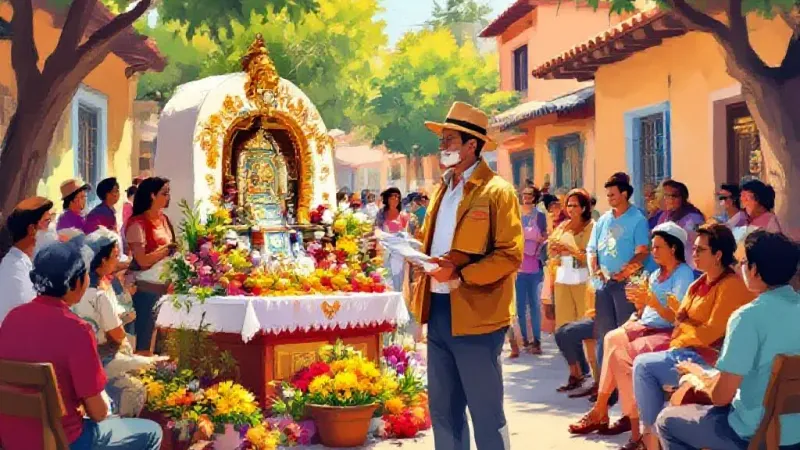
Residents across East San Jose gathered recently for Avenida de Altares, one of the neighborhood's defining cultural traditions held around Día de los Muertos, as San José Spotlight reported in a column by Mexican Heritage Plaza Chief Executive Officer Jessica Paz-Cedillos.
Rooted in Indigenous traditions and shaped by centuries of historical change, conquest, and resistance, the annual Día de los Muertos gathering offers community members a dedicated space to view death not as a simple ending, but as a opportunity to remember, celebrate, and reconnect with ancestors. Located along East San Jose's cultural corridor and at the Mexican Heritage Plaza, the displayed altars reflect personal family histories as well as broader social realities.
This year's observances carried a notable weight, honoring local figures alongside historic national leaders. Among those remembered at the Mexican Heritage Plaza was Chris Esparza, whose work and vision helped establish Avenida de Altares. Esparza spent years championing the celebration to ensure local families had a venue to preserve cultural traditions, share stories, and honor those who came before them.
The community also mourned civil rights icon Dolores Huerta, whose decades of labor organizing helped transform the farmworker movement while advancing civil rights, women's rights, and immigrant justice. Huerta's legacy continues to challenge future generations to push for ongoing social progress.
Visitors walking through the altars encounter displays dedicated to parents, children, and friends, alongside exhibits confronting systemic issues and historical losses. One installation features a red-beaded rosary stretching more than 50 feet, created to represent the lives lost along the U.S.-Mexico border since 1997. Other altars recognize immigrant community members who died seeking opportunity, pay tribute to the unsung labor and resilience of grandmothers, or highlight the quieted stories of survivors of violence.
The installations also invite active community participation. One interactive display prompts attendees to complete the phrase: "I release, I reclaim, the cycle ends when…"
According to Paz-Cedillos, altars serve both as expressions of deep familial affection and as physical acts of political resistance. The lives honored through the tradition were directly impacted by societal decisions regarding labor rights, community belonging, free speech, and self-determination. With this year's event taking place just days ahead of the Nov. 3 midterm election, the displays highlight how historical struggles connect directly to modern civic participation.
Paz-Cedillos noted that her mother often offers a steady reminder to bring her flowers while she is still alive. Beyond the literal meaning, the phrase serves as a call to show care, gratitude, and consideration to loved ones and the broader community without delay. She emphasized that honoring ancestors requires not only remembering their struggles and aspirations, but actively choosing to live in a way that shapes a better future for coming generations.
Paz-Cedillos writes a monthly column for San José Spotlight, published on the first Monday of each month.