

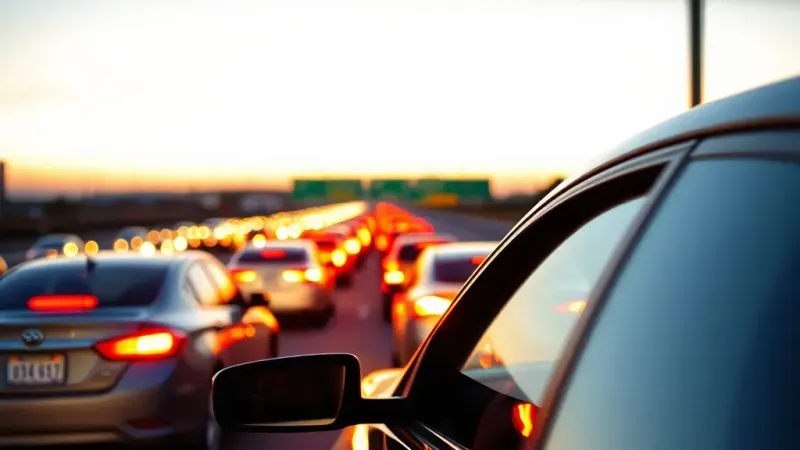
New York Post reported that a recent evaluation by ConsumerAffairs has examined holiday traffic congestion across major metropolitan areas, placing San Jose ninth on the list. Drivers and families navigating local streets and regional highways during the busy season encounter significant delays, though several other regions across California and the United States experience even more severe congestion issues according to the findings.
ConsumerAffairs detailed how various cities stack up against one another based on daily congestion metrics. In the top spot, Los Angeles recorded the longest daily congestion at eight hours and 27 minutes. Following that major Southern California metropolis, Miami ranked second on the list. Further down the standings, Houston ranked third with six hours and 22 minutes of congestion. Returning to Northern California, San Francisco placed fourth on the list.
As the rankings progress toward the lower end of the top ten, San Jose ranked ninth in the ConsumerAffairs assessment. Finally, Riverside-San Bernardino placed 10th on the list, completing the group of metropolitan areas highlighted in the report. These rankings illustrate how holiday travel demands affect different communities, straining local infrastructure as residents travel across town to visit family, run errands, or conduct daily business.
The broader implications of these traffic patterns were explored further in the data. The ConsumerAffairs report told New York Post: "Its summer congestion (traffic moving at less than 90% of free-flow speed) was already seven hours and 34 minutes, longer than any other metro’s average. That figure grew 11.7% in the holiday season, nearly double the national increase of 5.9%."
Understanding why minor changes in traffic volume cause massive slowdowns helps explain the frustrations shared by local commuters. Chenfeng Xiong told New York Post: "When a highway is already operating near capacity, even a relatively tiny increase in traffic can trigger a disproportionately large increase in delays." For San Jose residents, these insights provide a clearer picture of how regional transit pressures build up during peak travel periods throughout the year.