
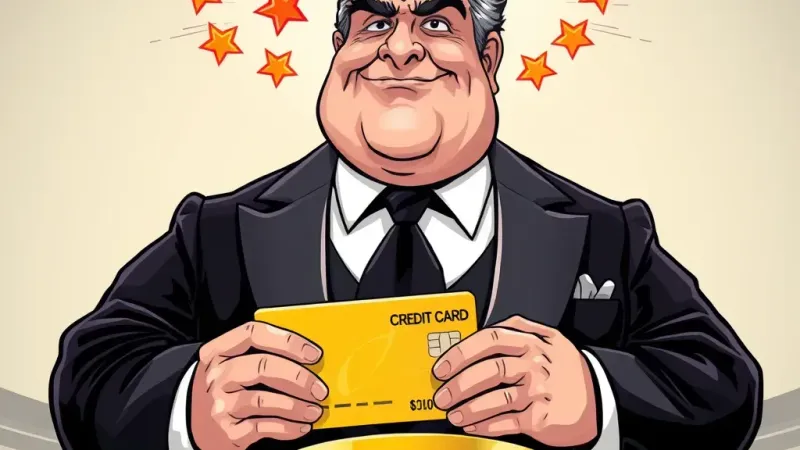
Donald Trump announced a sudden, uncharacteristic bipartisan push to cap credit card interest rates at 10 percent, leaving millions of Americans to wonder if they had somehow wandered into an alternate dimension where politicians occasionally help regular people instead of exclusively trading pharmaceutical stocks based on classified intelligence briefings.
The proposal, which instantly triggered collective chest pains across every executive suite from Wall Street to Charlotte, would slash the standard 29.99 percent APR that banks currently charge desperate cardholders who dared to finance necessities like groceries, emergency dental work, or a slightly overpriced iced coffee to cope with the crushing existential dread of late-stage capitalism. Financial industry lobbyists responded to the news with the kind of guttural, primal scream usually reserved for discovering that the IRS has audit powers over private islands.
"If we cannot trap working-class families in an inescapable, generational debt spiral fueled by compounding interest and predatory late fees, how on earth are we supposed to afford our third custom mega-yacht?" asked a visibly shaken banking representative, speaking on behalf of an entire economic sector that views usury as a fundamental human right enshrined in the Bill of Rights. "This isn't reform. This is economic terrorism against people who own golf courses. If we are limited to a mere ten percent return, we will be forced to engage in penny-pinching measures like cutting executive bonuses down to a paltry eight figures."
Wall Street analysts immediately rushed to the airwaves to warn that limiting lenders to a meager ten percent return on unsecured debt would instantly obliterate the American financial ecosystem. They argued that such draconian caps would force banks to find alternative revenue streams, such as street-corner shakedowns, organ harvesting, or charging monthly subscription fees just to look at your own checking account balance. Several major credit card issuers announced contingency plans to deploy autonomous repo-men directly to grocery store checkout lines to physically repossess Thanksgiving turkeys if a minimum payment is missed by more than four minutes.
"We are simply trying to protect the sanctity of the free market," added a spokesperson for Visa, wiping away tears with a pristine stack of uncirculated hundred-dollar bills. "When a consumer agrees to a twenty-nine percent interest rate, that is a sacred contract forged in the fires of mutual desperation. To strip that away is to strip away the American dream of dying in debt to a multinational conglomerate."
Meanwhile, congressional Democrats rushed to embrace the populist measure, absolutely thrilled at the prospect of briefly agreeing with a political opponent on a policy that polls remarkably well and requires zero actual legislative execution. Both parties expressed deep, unwavering optimism that they can spend the next eighteen months holding dramatic, televised subcommittee hearings, leaking sternly worded memos to friendly reporters, and ultimately ensuring the bill dies a quiet, anonymous death in a buried committee markup session while everyone is thoroughly distracted by a completely manufactured culture war.
Economic experts noted that if the cap somehow miraculously managed to pass, consumers might actually experience the terrifying, uncharted sensation of paying off a credit card balance before the heat death of the universe. For an entire generation of Americans raised on the comforting certainty of minimum-payment-induced destitution, the prospect of financial solvency is viewed with deep suspicion. As the legislative battle lines are drawn, lenders are scrambling to restructure their terms, reminding the public that true freedom means having the god-given liberty to pay 30 percent interest on a blender you bought during a depressive episode at 3 AM.